Resilient Roots
Putting cedars back on the slopes we walk.
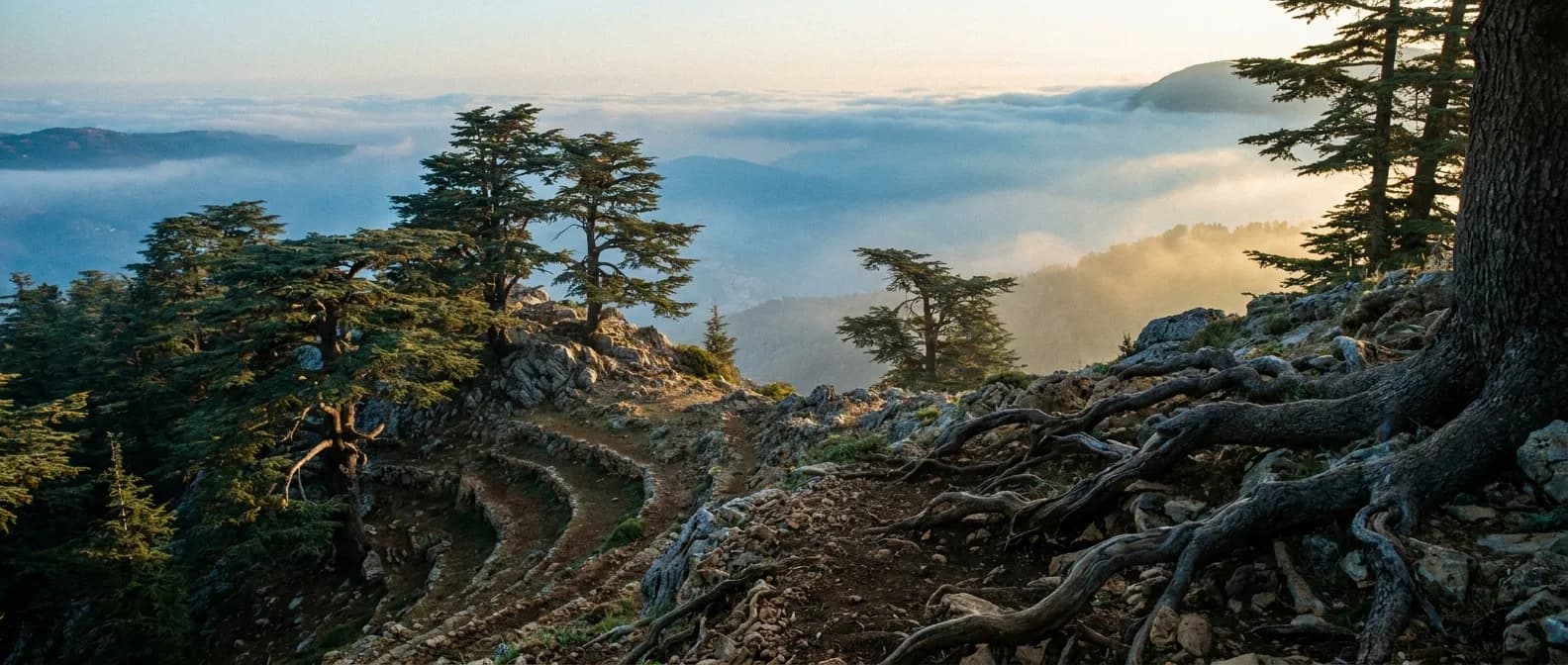
Every trail we walk passes terraces that were forest within living memory. Resilient Roots is our attempt to put some of it back — slowly, and with the people who live there.
The idea started the way most NAC things start: on a trail, arguing. We had just walked a ridge that was bare on one side and wooded on the other, and someone asked the obvious question about why we only ever look at landscapes instead of doing anything for them.
Why cedars, and why here
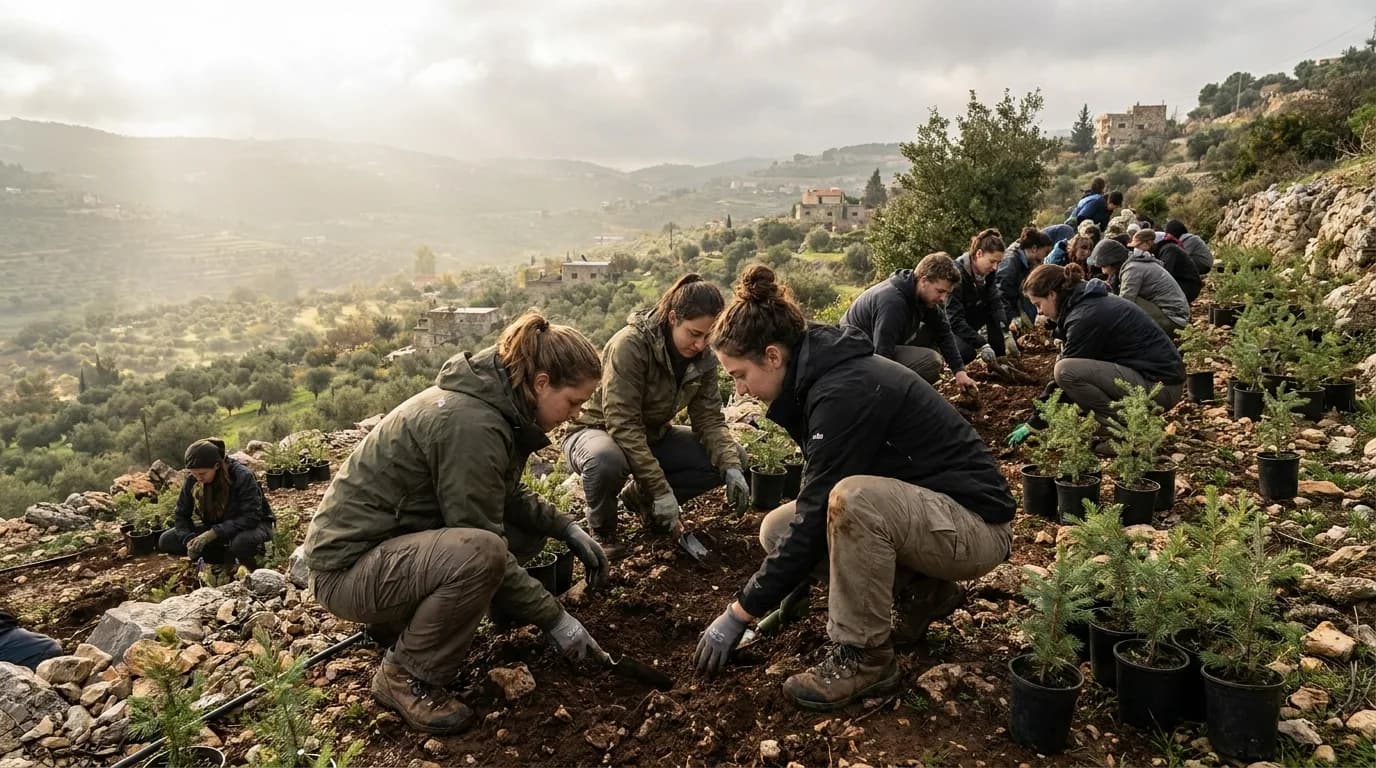
Cedar gets the attention, but a working forest needs company — oak, juniper, wild pear. We plant a mix, because a monoculture on a dry slope is a fire waiting to happen and a nursery bill nobody wants to pay twice.
Three summers
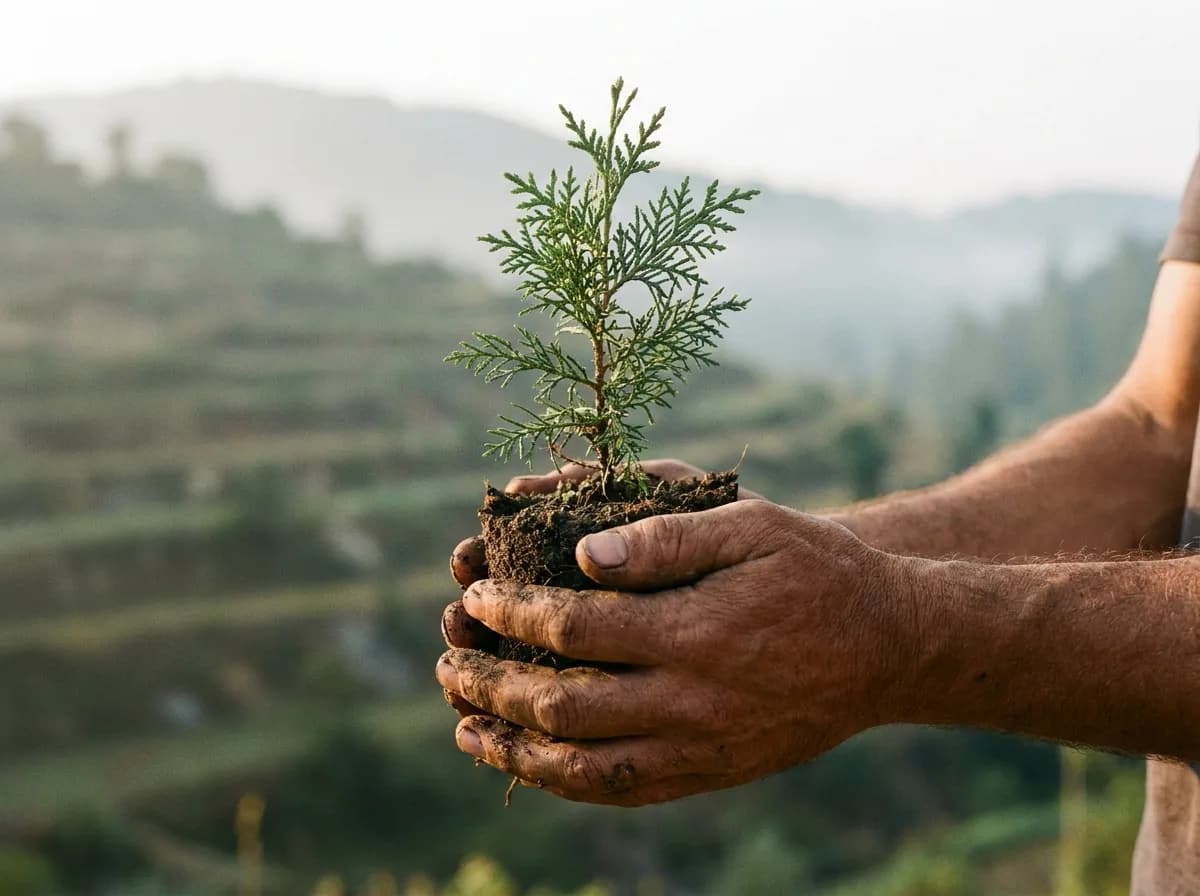
A sapling planted and forgotten is a sapling that dies. The real work is the watering rota through the first three summers, which is unglamorous, and which is why we ask people to adopt a site rather than a tree.
We are not planting trees for ourselves. We will not be the ones walking in their shade.
Ahmad Zeaiter, Founder
How a planting day runs
- Meet at the trailhead at 7am, walk in together
- Briefing on site — spacing, depth, and how not to drown a sapling
- Plant through the morning, break for food
- Log every sapling's position before we leave
The logging matters more than it sounds. A site nobody recorded is a site nobody returns to, and the difference between a reforestation project and a nice weekend is whether anyone comes back in August.
Objectives
- Plant native cedar, oak and juniper on degraded terraces
- Maintain and water every planting site through its first three summers
- Train volunteers from the hiking community in basic restoration work
- Work with landowners and municipalities rather than around them
Impact
Partners
- Local municipalities
- Landowner families
- Regional nurseries
Take part
Planting days run through autumn and early spring. No experience needed — we teach everything on site, and the walk in is part of the day.
Join a planting day